





South Carolina Mobile Bartending Laws
The Palmetto State allows for-profit mobile bars to sell beer and wine with a cheap daily permit, but strictly limits Liquor Sales to non-profit organizations.
Current as of February 2026
Select Your Business Model
Short Answer: No permit is required if the event is an “Unlicensed Social Function” (Private Party). Uniquely, SC allows you to be the “Designated Agent” to purchase alcohol for the client, provided you are reimbursed exactly with no markup.
The “Designated Agent” Advantage
Most states forbid you from touching the alcohol money. South Carolina is different. The SCDOR explicitly allows a bartending service to act as the “Designated Agent” for the host. You can pick up the alcohol and pay for it, provided the client reimburses you for the exact cost. [Ref] Agent Rule:
“A business may be contracted to obtain the alcohol… but can only be reimbursed for the actual cost… cannot charge a markup.”
Source: SCDOR Catering/Bartending Regulations
The Strategy: Offer a “Concierge Shopping Service.” Curate the menu, buy the product, and present the receipt for reimbursement. You make your profit on the portable bar for events rental and labor fees, not the booze markup.
Equipment: Historic Venue Access
Historic Limitations: South Carolina is famous for weddings in historic Charleston mansions and tight Columbia gardens. These venues often strictly prohibit heavy trailers on lawns or blocking courtyards.
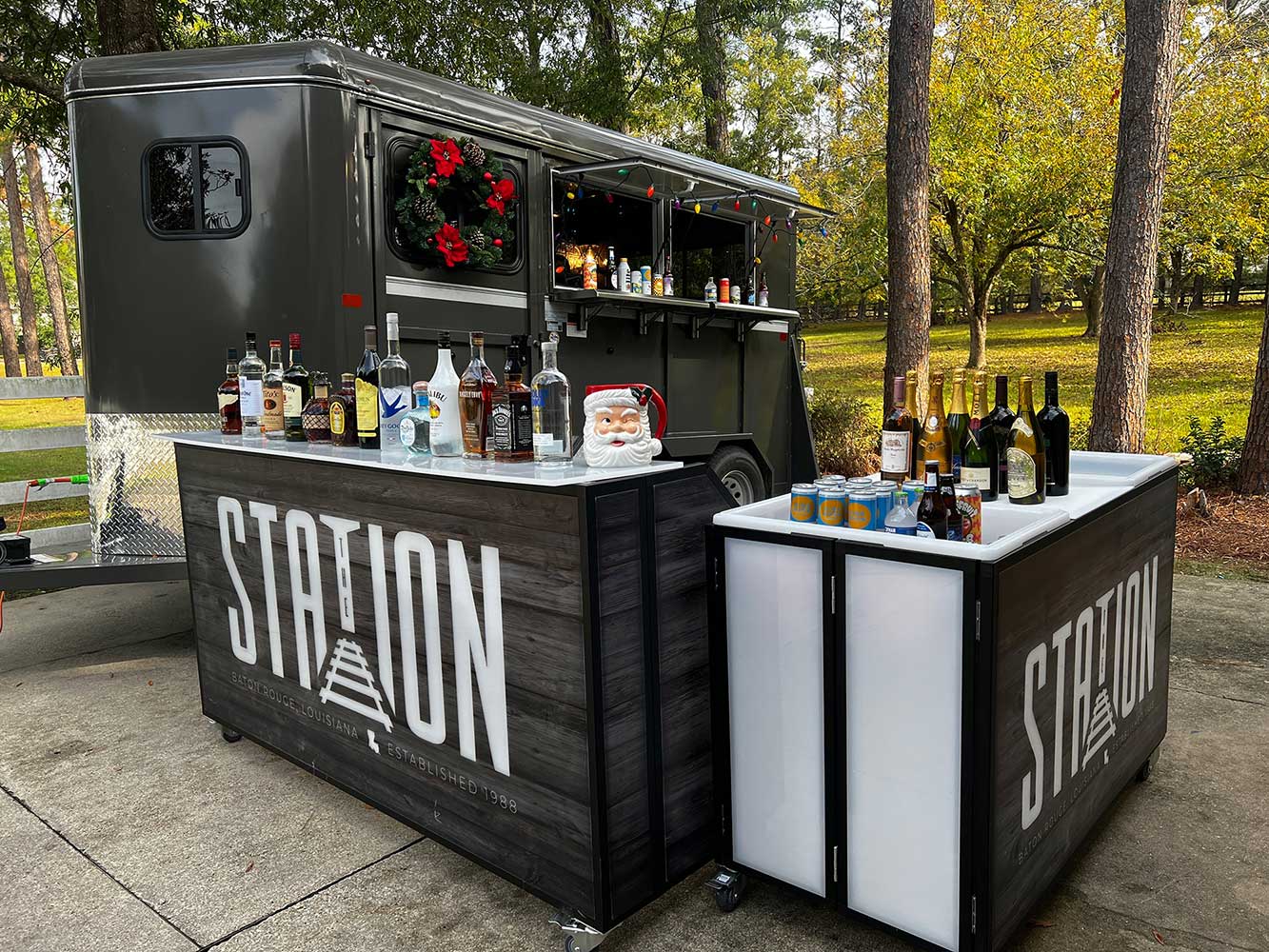
Modular Advantage: Using foldable mobile bars allows you to access second-floor ballrooms, navigate narrow garden gates, and set up in tight piazzas where trailers simply cannot fit. This accessibility opens up the most lucrative wedding venues in the state to your business.
Short Answer: Unlike most states, SC allows for-profit mobile bars to get a “Beer & Wine Special Event Permit” (TBP). You can legally buy and sell beer/wine for profit. You still cannot sell liquor.
The “Beer Garden” Loophole
This is a huge advantage for SC operators. You can apply for a Temporary Beer & Wine Permit (TBP) for just $10 per day. This allows you to set up a cash bar at festivals, concerts, or public events and sell beer/wine directly to guests. [Ref] TBP Permit:
“Individuals, businesses, and nonprofit organizations may apply for a Beer & Wine Special Event Permit.”
Source: SCDOR Special Event Permits
Requirement: You must have a SC Retail License and obtain the alcohol from a licensed SC Wholesaler (not Costco).
SLED Notification Required
Even though it’s just beer and wine, because you are holding a permit, you must notify SLED (State Law Enforcement Division) via email at least 24 hours before the event.
Short Answer: For-profit businesses cannot get a permit to sell liquor (spirits). This permit (TLP) is reserved exclusively for Non-Profit Organizations.
The “Non-Profit” Rule
This is the critical distinction in SC law: “Only a nonprofit organization may qualify for and receive a Liquor Special Event Permit (TLP).” A for-profit mobile bar business is legally prohibited from running a cash bar for vodka, tequila, or whiskey. [Ref] Liquor Permit (TLP):
“Only a nonprofit organization may qualify for and receive a Liquor Special Event Permit.”
Source: SCDOR License Directory
Workaround: To sell liquor, you must partner with a charity. The Non-Profit applies for the TLP, buys the alcohol, and keeps the profits. You charge them a flat service fee for your staff and mobile bars.
Why not a Caterer’s License?
To get a permanent “Liquor by the Drink” caterer’s license, you must be “primarily engaged in the preparation and serving of meals.” This requires a commercial kitchen serving meals to 40+ people. Mobile bars do not qualify. [Ref] Restaurant Rule:
Permanent liquor licenses require a kitchen serving meals to 40+ persons simultaneously.
Source: SC Code 61-6-20
⚠️ Reality Check: Local Traps
South Carolina has specific enforcement quirks involving SLED and Sunday sales. Watch out for these traps.
1. The 2026 Insurance Bomb
Effective Jan 1, 2026, any licensed special event selling alcohol after 5:00 PM must carry a minimum of $500,000 in liquor liability insurance. [Ref] 2026 Mandate:
Mandatory $500k liability insurance for evening events starting 1/1/26.
Source: SCDOR Special Events
Impact: Applies to Wet Hire/Permits.
2. Leftover Alcohol
In Dry Hire, you cannot keep the leftovers. “Any unused beer, wine, or liquor belongs to the event host.” You cannot take it home for your next gig.
Reality: Leave it with the client.
3. Sunday Sales
SC is a “Local Option” state. Many counties prohibit Sunday sales unless a specific referendum passed. Check the specific county/city list before booking a Sunday wedding.
Reality: Use the SCDOR LOP List.
Staffing & Operations Matrix
SC distinguishes between “Bartenders” (Mixers) and “Servers” (Carriers).
| Role | Minimum Age | Duties Allowed |
|---|---|---|
| Bartender | 21+ | Required to open bottles, mix drinks, or pour spirits. [Ref] Age 21: Must be 21 to function as a bartender (mix/prepare/open). Source: SCDOR Age Requirements |
| Server | 18+ | Can serve open containers to tables, but cannot mix/pour. |
| Training | Mandatory (2026) | New law requires approved server training starting Jan 1, 2026. [Ref] Server Training: Mandatory for on-premises alcohol servers effective 1/1/2026. Source: SCDOR License Directory |
Common Questions
How exactly does the “Designated Agent” rule work? ▼
Reimbursement Only. You can purchase the alcohol for the client, but you “can only be reimbursed for the actual cost of the alcohol.” You must provide the receipt. You cannot charge a markup or fee on the alcohol itself. Your profit must come from a separate service or rental fee. [Ref] Agent Rule:
“Cannot charge a markup, as doing so constitutes an illegal sale.”
Source: SCDOR Catering Regs
Can I use my business credit card to buy the alcohol? ▼
Yes, as an Agent. SC regulations allow a bartending service to act as the “designated agent” to purchase and deliver alcohol. You can use your card, but the final invoice to the client must show the exact reimbursement amount for the alcohol with zero profit added. [Ref] Concierge Purchasing:
Authorized as long as the transaction is a reimbursement.
Source: SCDOR Catering Regs
Does the 2026 insurance rule apply to Dry Hire events? ▼
Technically No, but check your venue. The law mandates $500,000 liquor liability insurance for licensed special events (Wet Hire/Permits). A Dry Hire event is “unlicensed.” However, most venues will require you to carry General Liability and often Liquor Liability regardless of the statutory mandate. [Ref] Insurance Scope:
Applies to “Special Event Permits” selling alcohol after 5 PM.
Source: SCDOR Special Events
Do I need server training if I only do Dry Hire? ▼
It is Best Practice. The 2026 law mandates training for “alcohol servers and managers” at licensed premises. While Dry Hire operates under a private party exemption, having certified staff protects you from liability and makes you more attractive to venues and insurers. [Ref] Training Mandate:
Required for on-premises consumption servers starting 2026.
Source: SCDOR PLB License
Can I create my own Non-Profit to get around the liquor permit restriction? ▼
No. The law restricts Liquor Special Event Permits to “qualifying” nonprofit organizations (religious, civic, charitable). Creating a sham non-profit solely to funnel liquor profits to a business is fraud. Stick to partnering with legitimate existing charities. [Ref] Eligibility:
“Only a nonprofit organization may qualify… for a Liquor Special Event Permit.”
Source: SCDOR TLP Directory
Can I serve at a Sunday wedding? ▼
If the County allows it. Sunday sales are prohibited unless the specific county/city passed a referendum. Check the SCDOR’s list of “Local Option Permit” counties. If the venue is in a “Dry on Sunday” county, you must stop serving at 11:59 PM Saturday. [Ref] Local Option:
Counties like Charleston and Horry allow Sunday sales; others do not.
Source: SCDOR LOP List
What is an “Unlicensed Social Function” exactly? ▼
A Private Party. It is defined as a noncommercial event with no admission fee, where alcohol is served at no charge, and the host does not have a liquor license. This is the legal category that allows Dry Hire weddings to exist without a permit. [Ref] Definition:
“Noncommercial event… no admission fee… alcohol served at no charge.”
Source: SCDOR Special Events
Can I serve at Myrtle Beach or Charleston beach weddings? ▼
Generally No on public beaches. A permit requires a “licensed premise” controlled by the applicant (lease/deed). Most public beaches prohibit alcohol consumption entirely. You can serve at private beachfront homes or venues, but rarely on the sand itself. [Ref] Premise Rule:
“Licensed premises… must be controlled by the applicant.”
Source: SCDOR Special Event Permits
What’s the difference between TBP and TLP permits? ▼
TBP is a Temporary Beer & Wine Permit ($10/day) available to anyone (including for-profits).
TLP is a Temporary Liquor Permit ($35/day) available ONLY to Non-Profit organizations. This is why for-profits cannot sell liquor. [Ref] Permit Types:
TBP = Beer/Wine. TLP = Liquor (Non-Profits Only).
Source: SCDOR License Directory
What does “SLED” stand for and what do they do? ▼
State Law Enforcement Division. They enforce criminal alcohol laws (sales to minors, operating without a permit). If you hold a Wet Hire permit, you must notify their Vice Division via email 24 hours before your event, or your permit is invalid. [Ref] Enforcement:
SLED agents investigate violations and receive mandatory event notifications.
Source: SLED Vice Division
Access Any Venue
South Carolina is famous for weddings in historic Charleston mansions and tight garden courtyards where large trailers simply cannot fit. Our portable bars on wheels allow you to navigate narrow gates, elevators, and historic piazzas, giving you access to the most exclusive venues in the state.
Zero-Tool Assembly
Set up a professional station in minutes, even in tight spaces.
Built for Volume
Integrated ice wells and speed rails designed for high-traffic events.