







テキサス州の移動式バーテンダー法
Texas does not require a bartending license. Anyone 18 or older can pour and serve, and TABC certification is voluntary under state law. There is no mobile bar liquor license in Texas. If your client buys the alcohol, you can run a mobile bar with zero TABC permits. If you want to sell alcohol, the only real path is a Mixed Beverage Permit paired with a Caterer’s Permit. This guide covers both routes, the age rules, the costs, and the traps that get Texas bartenders in trouble.
Current as of July 2026. Verified against the Texas Alcoholic Beverage Code and TABC sources.
Texas Mobile Bartending: Key Facts
The quick answers first. Every row below is covered in depth further down the page.
ビジネスモデルの選択
Everything in Texas hinges on one question. Who buys the alcohol? Pick the model that matches your plan and the rules change completely.
How Dry Hire Works in Texas
Texas law restricts the セール of alcohol, not the pouring of it. The Alcoholic Beverage Code requires a permit to sell, store for sale, or take orders for liquorTex. Alco. Bev. Code 11.01(a): no person who has not first obtained a permit may, in a wet area, sell, possess for the purpose of sale, transport, or solicit or take orders for liquor.Click to view full citation. When your client purchases the alcohol from a liquor store and hands it to you at their private event, no sale happens at the bar. That is the entire legal basis of dry hire, and it is why most Texas mobile bartending businesses run this model.
You can charge for
- Bartending labor and staffing
- Portable bar and equipment rental
- Mixers, juices, garnishes, and ice
- Cups, napkins, straws, and consumables
- Setup, teardown, and travel
You cannot
- Charge for the alcohol itself, directly or hidden in a package price
- Buy the alcohol and get reimbursed by the client
- Charge guests per drink or run a cash bar
- Advertise drinks for sale to the public
Keep the paper trail clean. Your invoice should list bartending service, bar rental, mixers, and ice as separate line items with the alcohol nowhere on it. Have the client keep their liquor store receipt. If TABC or an insurer ever asks, ownership of the alcohol is provable in ten seconds. An unlicensed sale is a criminal offense under the codeSelling alcohol without the required TABC permit is a criminal violation of the Alcoholic Beverage Code, punishable as a misdemeanor under the code’s penalty provisions. Paraphrase of Tex. Alco. Bev. Code 11.01 and 1.05.Click to view full citation, so the gap between a clean dry hire and an illegal bar is entirely in how the money flows.
Dry hire events are still real alcohol service. Serving minors and overservice rules apply at private and BYOB events exactly as they do at a licensed barTABC FAQs: making alcoholic beverages available to a minor is a class A misdemeanor punishable by a fine up to $4,000, confinement in jail for up to a year, or both. State alcohol laws apply at BYOB locations and events.Click to view full citation. Get your staff TABC certified even though the state does not force you to. It costs about $15 per person and it is the cheapest insurance in the industry.
Selling Alcohol: The MB + CB Route
There is no license for a roaming bar. TABC is explicit that a Caterer’s Permit is only issued to the holder of a Mixed Beverage Permit and authorizes sales on a temporary basis at a place other than the permitted premisesTABC Caterer’s Permit course: “A Caterer’s Permit (CB) is only issued to the holder of a mixed beverage permit (MB or RM) and authorizes the sale of alcoholic beverages on a temporary basis at a place other than the premises for which the holder’s mixed beverage permit is issued.”Click to view full citation. In plain English, you first license a permanent commercial address as a bar, then the CB lets you carry that authority to event sites. A truck or trailer cannot anchor the permit.
What the MB + CB stack actually requires
- A permanent premises. Leased or owned commercial space that passes local certification. This is usually the biggest hidden cost.
- Mixed Beverage Permit. $5,300 state fee for the original two year term, $2,650 at renewalTABC two year licensing fee schedule effective Sept. 1, 2021: Mixed Beverage Permit (MB) $5,300 original, $2,650 renewal. Cities and counties may add local fees.Click to view full citation, plus surety bonds and possible city and county fees.
- Caterer’s Permit. The subordinate CB permit rides on the MB. A catering certificate is filed with the local TABC office for each event area.
- Local option clearance. The CB only works where mixed beverage sales have been approved by local electionTABC Caterer’s Permit course: “This privilege may only be granted in an area where the sale of mixed beverages has been authorized by a local option election.”Click to view full citation. With 191 partially wet counties, this is a real routing constraint.
- Full control of the bar. The permit holder must control every phase of the sale and service, including purchasing, pricing, records, transportation, and storageTABC Catering Certificate Request packet: “Permit holder must have control of all phases of the sale and service of alcohol,” including brands, pricing, inventory purchase, sales, records, transportation, storage, and hours. All profits from alcohol sales must go to the permit holder.Click to view full citation. You cannot split alcohol profits with a venue.
- Mixed beverage taxes. Every sale carries a 6.7 percent gross receipts tax paid by you plus an 8.25 percent mixed beverage sales taxTexas Comptroller: mixed beverage permittees owe a 6.7 percent mixed beverage gross receipts tax and collect an 8.25 percent mixed beverage sales tax on alcohol sold. Paraphrase of Comptroller guidance.Click to view full citation, filed monthly with the Comptroller.
Alcohol for a catered event must be purchased through the proper channel in the county tied to your MB premises, and leftover inventory goes back to your licensed premises when the certificate expires. Storage at the venue overnight is not an option. Hours of sale follow the same clock as a brick and mortar bar.
Realistic budget: between the premises lease, the $5,300 MB fee, the CB, a Food and Beverage Certificate if required, bonds, and insurance, plan on well past $10,000 in year one before you pour a single drink. That is why most Texas operators start dry hire, build the client list, and only chase the MB + CB stack once event volume justifies it. Some partner with an existing MB + CB caterer for cash bar events instead, which keeps the sale under the caterer’s permit.
3 Regulatory Traps That Catch Texas Mobile Bartenders
These are the three mistakes that turn a legal dry hire operation into a TABC enforcement case.
The Package Price That Becomes a Sale
Charging $30 per guest for an open bar package, or buying the alcohol and getting reimbursed, makes you the seller in TABC’s eyes even if you never ring up a single drink. The moment alcohol cost flows through your business, you need the permit you do not have. Keep alcohol purchases entirely in the client’s name and keep it off your invoice.
The Temporary Permit That No Longer Exists
Older guides still recommend the Daily Temporary Mixed Beverage Permit as a per-event workaround. TABC’s 2021 restructuring replaced it. The only temporary event permit today is for qualifying nonprofits at $50 per dayTABC Temporary Event Authorizations: nonprofits meeting the Sec. 30.01 definition apply for a Nonprofit Entity Temporary Event Permit (NT), $50 per day, up to 10 consecutive days. Chapter 30 was rewritten by HB 1545 effective Sept. 1, 2021.Click to view full citation. A for-profit mobile bar has no temporary sales path. It is dry hire, the full MB + CB stack, or partnering with an existing permit holder.
The County Line Surprise
Texas is a local option state. 191 of 254 counties are partially wet, so what is legal at one ranch venue can be prohibited a precinct over. In a dry area, even transporting or storing alcohol with intent to sell is a Class B misdemeanorTex. Alco. Bev. Code 101.31: “no person in a dry area may manufacture, distill, brew, sell, import into the state, export from the state, transport, distribute, warehouse, store, solicit or take orders for, or possess with intent to sell an alcoholic beverage.” Class B misdemeanor.Click to view full citation. Check the TABC wet dry map for every new venue before you quote the job.
Does Texas Require a Bartending License?
そうだ。. Texas does not issue a bartending license, and no state law requires a bartender to hold any certification. What exists instead is voluntary TABC seller-server certification, a roughly two hour online course that costs $10 to $15 and stays valid for two years.
Voluntary does not mean optional in practice. Texas has a safe harbor law: if a business requires TABC approved training, the employee actually completed it, and the business did not encourage a violation, then an employee’s illegal sale is not attributed to the businessTex. Alco. Bev. Code 106.14(a): “the actions of an employee shall not be attributable to the employer if: (1) the employer requires its employees to attend a commission-approved seller training program; (2) the employee has actually attended such a training program; and (3) the employer has not directly or indirectly encouraged the employee to violate such law.”Click to view full citation. That protection is why nearly every bar, venue, event planner, and liquor liability insurer in Texas treats the TABC card as a hard requirement. For a mobile bartending business, certifying every server protects your company the same way it protects a brick and mortar bar.
How to Start a Mobile Bartending Business in Texas
Seven steps from idea to first event. This is the dry hire path, which is how nearly every Texas operator launches.
- 1
Pick your model
Dry hire to start. The client buys the alcohol, you bring everything else. You can layer in a licensed caterer partnership later for cash bar requests, and chase MB + CB permits only if volume demands it.
- 2
Form the business
A Texas LLC costs $300 to file with the Secretary of State, with no annual report fee. Get a free EIN from the IRS. Most dry hire operators file under NAICS 722320 for caterers.
- 3
Get a Texas sales tax permit
Free from the Comptroller. Your bartending service, rentals, mixers, and consumables are taxable sales even though the alcohol is not yours.
- 4
TABC certify every server
About $10 to $15 per person through a TABC approved online provider, valid two years. Voluntary by law, mandatory in practice for venues and insurance.
- 5
Carry the right insurance
General liability plus liquor liability, typically $500 to $1,500 per year for a dry hire operation. Many Texas venues will not let you set up without a certificate of insurance naming them as additional insured.
- 6
Write a dry hire contract
State plainly that the client purchases and owns all alcohol, you provide service only, and your staff can refuse service to minors and intoxicated guests. Line item the invoice: labor, bar rental, mixers, ice. Alcohol appears nowhere.
- 7
Buy your bar and gear
A professional ポータブルバー runs $700 to $5,000 depending on size and features. Add tools, coolers, and consumable stock and most Texas operators launch for $2,000 to $8,000 all in.
Age Rules, Staffing, and Service Hours
Overservice Liability Is Real
Texas dram shop law creates liability when it was apparent that the person served was obviously intoxicated to the extent that they presented a clear danger to themselves and others, and that intoxication caused the damagesTex. Alco. Bev. Code 2.02(b): liability requires proof that “at the time the provision occurred it was apparent to the provider that the individual being sold, served, or provided with an alcoholic beverage was obviously intoxicated to the extent that he presented a clear danger to himself and others” and that the intoxication proximately caused the damages.Click to view full citation. Train your staff to cut people off, document incidents, and lean on the same safe harbor training that protects licensed bars.
営業時間
Permit holders may sell mixed beverages between 7 a.m. and midnight Monday through Saturday, and Sunday from 10 a.m. with food service until noon, then to midnight, plus a 1 a.m. close after Saturday nightTex. Alco. Bev. Code 105.03(b): “A mixed beverage permittee may sell and offer for sale mixed beverages between 7 a.m. and midnight on any day except Sunday. On Sunday he may sell mixed beverages between midnight and 1:00 a.m. and between 10 a.m. and midnight,” with 10 a.m. to noon service requiring food. Late hours areas extend sales to 2 a.m.Click to view full citation. Late hours areas extend to 2 a.m. Dry hire events are not bound by sale hours because nothing is sold, but venue rules and local noise ordinances still control when you pour.
Dry Counties and the Local Option Map
Texas lets voters decide alcohol rules county by county, city by city, and even precinct by precinct. As of 2026 only three counties remain completely dry: Borden, Kent, and Roberts. Sixty counties are fully wet, and the other 191 are partially wet with a patchwork of rules inside themTABC Local Option Elections page: as of March 2025 there are 60 completely wet counties and three completely dry counties. As of July 2026 the three dry counties are Borden, Kent, and Roberts. Throckmorton County voted to allow beer and wine sales in November 2024.Click to view full citation.
What this means for a mobile bar: a dry hire event at a private ranch is generally workable anywhere because no sale occurs, but selling under a Caterer’s Permit only works where mixed beverage sales have been approved by local election. In a dry area, transporting or storing alcohol with intent to sell is itself an offense. The rules can flip at a county or precinct line between your shop and the venue.
Before quoting any new venue, spend two minutes on the TABC wet dry map. Local option elections happen several times a year, so the map beats any static list, including this one.
Consumables and Equipment for Mobile Bartending
The consumables used by mobile bartending services are ice, mixers, juices, sodas, garnishes, simple syrups, bitters, cups, napkins, straws, and cocktail picks. In a Texas dry hire operation these consumables are the core of your invoice. The client supplies the alcohol, and you supply everything that turns it into a finished drink.
Consumables checklist
- 氷. Plan 1.5 to 2 lbs per guest for a full bar. It is the item that runs out first at every Texas summer event.
- Mixers and sodas. Tonic, club soda, cola, lemon lime, ginger beer. Roughly 2 to 3 servings per guest.
- Juices. Lime, lemon, orange, cranberry, pineapple. Fresh citrus reads premium and costs pennies more.
- Garnishes. Limes, lemons, oranges, cherries, olives, mint, salt and sugar rims.
- Syrups and bitters. Simple syrup, agave, Angostura. Small bottles, big margins on signature cocktails.
- Service goods. Cups, napkins, straws, picks, and squeeze bottles. Disposable or rented glassware depending on the event tier.
Equipment that books the gigs
- Fusion 48 portable bar for tight indoor spaces and cocktail hours.
- Signature 62 LED bar, the workhorse size for weddings and corporate events.
- サミット77 when the guest count climbs and you need two bartenders behind one bar.
- バック・バー 54 for bottle display and speed rail overflow.
- Ice bins, storage cases, and accessories that keep the rig road ready.
- Shakers, strainers, jiggers, pour spouts, coolers, and a hand wash setup where county health rules require one.
Texas Mobile Bartending FAQ
Every question below comes from what Texans actually search. Grouped so you can jump to what matters.
Licensing and Dry Hire
Do you need a bartending license in Texas?
Do you need a liquor license for a mobile bar in Texas?
What is dry hire mobile bartending?
Can you have a mobile bar in Texas?
Can I charge a per-person open bar package that includes alcohol?
Can my client reimburse me for alcohol I pick up?
Can I put out a tip jar at a dry hire event?
Selling Alcohol, MB + CB, and Permits
How do I get a liquor license for a mobile bar in Texas?
Is there a temporary bar permit in Texas?
Can I sell drinks at a festival or public event?
What is TABC compliant bartending?
Can I partner with a licensed caterer instead of getting my own permits?
What taxes do Mixed Beverage Permit holders pay?
Age and TABC Certification
How old do you have to be to bartend in Texas?
Can you bartend at 18 in Texas?
Can someone under 18 work for my mobile bar company?
Is TABC certification required, and how long does it last?
What does the TABC course actually cover?
Costs and Startup
How much does it cost to start a mobile bartending business in Texas?
How much is a liquor license for a mobile bar?
What insurance does a Texas mobile bartender need?
What NAICS code fits a mobile bartending service?
Consumables, Equipment, and Operations
What consumables do mobile bartending services use?
What equipment do I need to start?
Are there still dry counties in Texas in 2026?
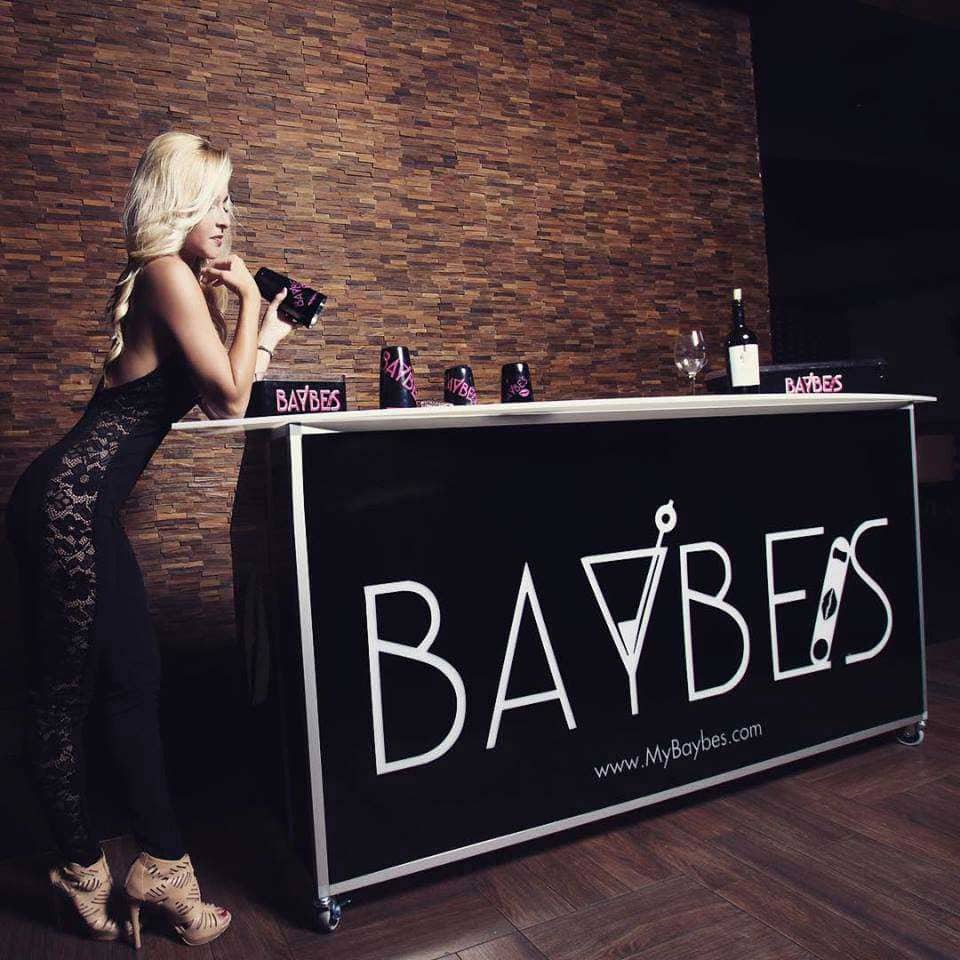
Your Texas Laws Are Handled. Now Get the Bar.
Every bar we build ships from our North Carolina factory, sets up in minutes, and is engineered for the mobile bartender who loads in, pours for 200 Texans, and loads out the same night. American made since 2004.
Official Texas Resources
テキサス州アルコール飲料委員会
Licensing through AIMS, seller training providers, enforcement guidance, and marketing practice advisories.
TABC Wet Dry Map and Local Option Data
Interactive county and precinct map. Check every new venue here before quoting the job.
TABC Temporary Event Authorizations
Current rules for nonprofit event permits and temporary event approvals for existing permit holders.
Texas Comptroller: Mixed Beverage Taxes
Gross receipts and mixed beverage sales tax rates, filing schedules, and sales tax permits.
Primary law: Alco. Bev. Code Ch. 11, Ch. 106, Ch. 105, and Ch. 30 at the Texas Legislature’s statutes site.
正式な法的引用
Every numbered reference on this page, in order. Quotes are verbatim from the source. Paraphrases are labeled.
Tex. Alco. Bev. Code 106.09(a). Employment of Minors.
“no person may employ a person under 18 years of age to sell, prepare, serve, or otherwise handle liquor, or to assist in doing so.”
statutes.capitol.texas.govTABC Two Year Licensing Fees, effective Sept. 1, 2021.
“Mixed Beverage Permit and Mixed Beverage w/FB required (MB) $5,300 original; $2,650 renewal.” Cities and counties may charge additional local fees.
tabc.texas.gov (PDF)Tex. Alco. Bev. Code 11.01(a). Permit Required.
“No person who has not first obtained a permit of the type required for the privilege exercised may, in a wet area, do any of the following: (1) manufacture, distill, brew, sell, possess for the purpose of sale, import into this state, export from this state, transport, distribute, warehouse, or store liquor; (2) solicit or take orders for liquor…”
statutes.capitol.texas.govTex. Alco. Bev. Code 11.01 and 1.05. Unlicensed Sale (paraphrase).
Paraphrase: selling alcohol without the required TABC permit violates the Alcoholic Beverage Code and is punishable as a misdemeanor under the code’s penalty provisions, with dry area offenses separately penalized under 101.31.
statutes.capitol.texas.govTABC FAQs. BYOB Locations and Events.
“The punishment for making alcoholic beverages available to a minor is a class A misdemeanor, punishable by a fine up to $4,000, confinement in jail for up to a year or both.” State alcohol laws on minors and intoxication apply at BYOB locations and events.
tabc.texas.gov/faqsTABC Caterer’s Permit (CB) Compliance Course.
“A Caterer’s Permit (CB) is only issued to the holder of a mixed beverage permit (MB or RM) and authorizes the sale of alcoholic beverages on a temporary basis at a place other than the premises for which the holder’s mixed beverage permit is issued.”
tabc.texas.gov (PDF)TABC Two Year Licensing Fees, effective Sept. 1, 2021.
Mixed Beverage Permit state fee: $5,300 original two year term, $2,650 at renewal. Surety bond requirements under Alco. Bev. Code 11.11 apply to most retail applicants.
tabc.texas.gov (PDF)TABC Caterer’s Permit (CB) Compliance Course. Local Option.
“This privilege may only be granted in an area where the sale of mixed beverages has been authorized by a local option election.”
tabc.texas.gov (PDF)TABC Catering Certificate Request Packet (Form L-CCFP).
“Permit holder must have control of all phases of the sale and service of alcohol. This includes but is not limited to: brands, pricing, inventory purchase, sales, records, transportation, storage, hours…” and “All profits from the sale/service of alcoholic beverages must go to the permit holder.”
tabc.texas.gov (PDF)Texas Comptroller. Mixed Beverage Taxes (paraphrase).
Paraphrase: mixed beverage permittees owe a 6.7 percent mixed beverage gross receipts tax on alcohol sales and collect an 8.25 percent mixed beverage sales tax, both filed with the Comptroller.
comptroller.texas.govTABC Temporary Event Authorizations. Nonprofit Entity Temporary Event Permit.
“Nonprofits that meet the ‘nonprofit entity’ definition in Section 30.01 of the Alcoholic Beverage Code must apply for a Nonprofit Entity Temporary Event Permit (NT)… pay an application fee of $50 per day of the event.” Chapter 30 was rewritten by HB 1545 effective Sept. 1, 2021, replacing the former Daily Temporary Mixed Beverage Permit.
tabc.texas.govTex. Alco. Bev. Code 101.31. Alcoholic Beverages in Dry Areas.
“no person in a dry area may manufacture, distill, brew, sell, import into the state, export from the state, transport, distribute, warehouse, store, solicit or take orders for, or possess with intent to sell an alcoholic beverage.” An offense under this section is a Class B misdemeanor.
statutes.capitol.texas.govTex. Alco. Bev. Code 106.14(a). Actions of Employee (Safe Harbor).
“the actions of an employee shall not be attributable to the employer if: (1) the employer requires its employees to attend a commission-approved seller training program; (2) the employee has actually attended such a training program; and (3) the employer has not directly or indirectly encouraged the employee to violate such law.”
statutes.capitol.texas.govTABC FAQs. Providing Alcohol to a Minor.
“The punishment for making alcoholic beverages available to a minor is a class A misdemeanor, punishable by a fine up to $4,000, confinement in jail for up to a year or both. The violator’s driver’s license will be automatically suspended for 180 days on conviction.”
tabc.texas.gov/faqsTex. Alco. Bev. Code 2.02(b). Dram Shop Act.
Liability requires proof that “at the time the provision occurred it was apparent to the provider that the individual being sold, served, or provided with an alcoholic beverage was obviously intoxicated to the extent that he presented a clear danger to himself and others” and that the intoxication was a proximate cause of the damages.
statutes.capitol.texas.govTex. Alco. Bev. Code 105.03(b). Hours of Sale: Mixed Beverages.
“A mixed beverage permittee may sell and offer for sale mixed beverages between 7 a.m. and midnight on any day except Sunday. On Sunday he may sell mixed beverages between midnight and 1:00 a.m. and between 10 a.m. and midnight, except that an alcoholic beverage served to a customer between 10 a.m. and 12 noon on Sunday must be provided during the service of food to the customer.”
statutes.capitol.texas.govTABC Local Option Elections.
“As of March 2025, there are 60 completely wet counties in Texas and three completely dry counties.” As of July 2026 the three dry counties are Borden, Kent, and Roberts, with 191 counties partially wet. Throckmorton County approved beer and wine sales in November 2024.
tabc.texas.govTABC Form L-NT. Nonprofit Entity Temporary Event.
“a Nonprofit Entity Temporary Event permit may be issued to a nonprofit entity (as defined in Sec. 30.01)… Fees are $50.00 per day and shall be effective for no more than ten consecutive days.” Permit holders must maintain exclusive control of all phases of possession, sale, and service of alcohol.
tabc.texas.gov (PDF)Tex. Alco. Bev. Code 106.09(c). Minors in Non-Serving Roles.
“A holder of a permit or license providing for the on-premises consumption of alcoholic beverages may employ a person under 18 years of age to work in any capacity other than the actual selling, preparing, or serving of alcoholic beverages.”
statutes.capitol.texas.gov